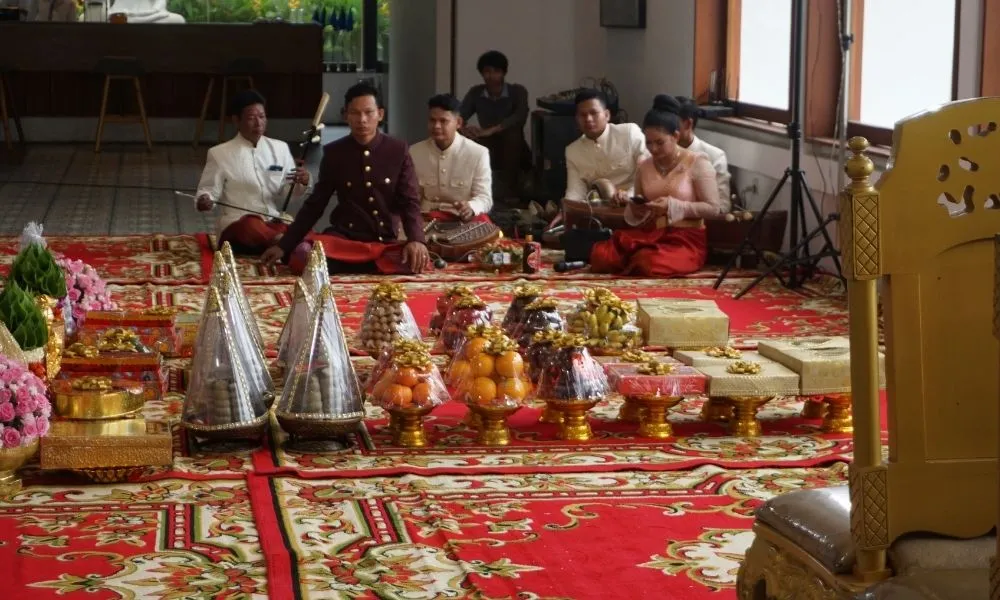
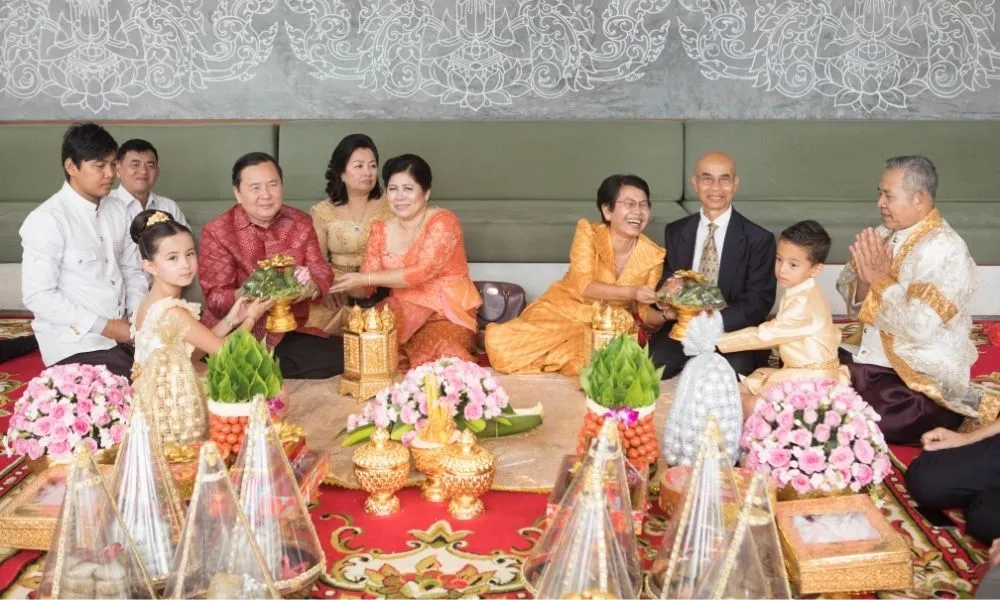
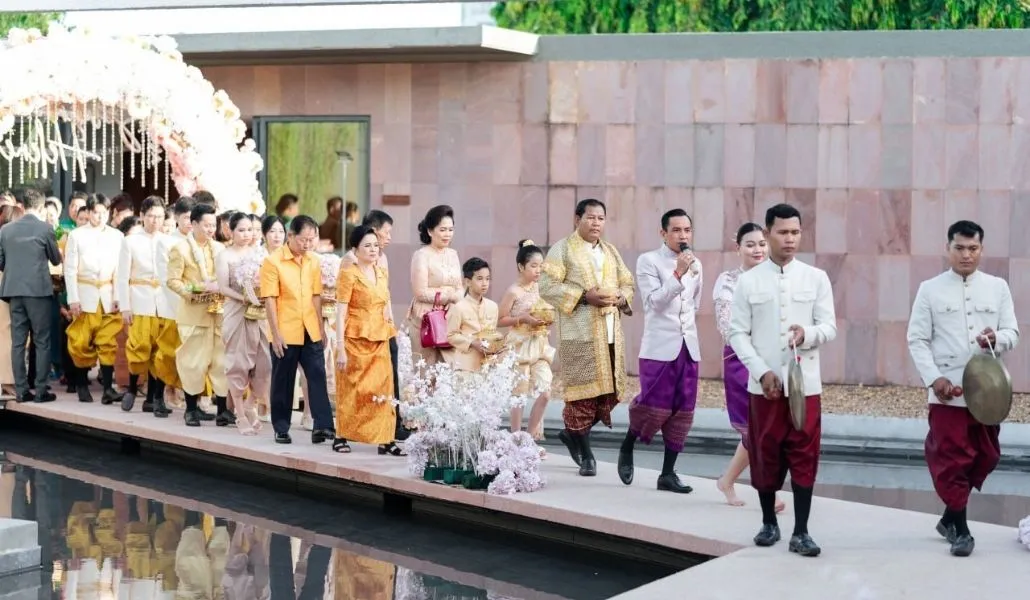
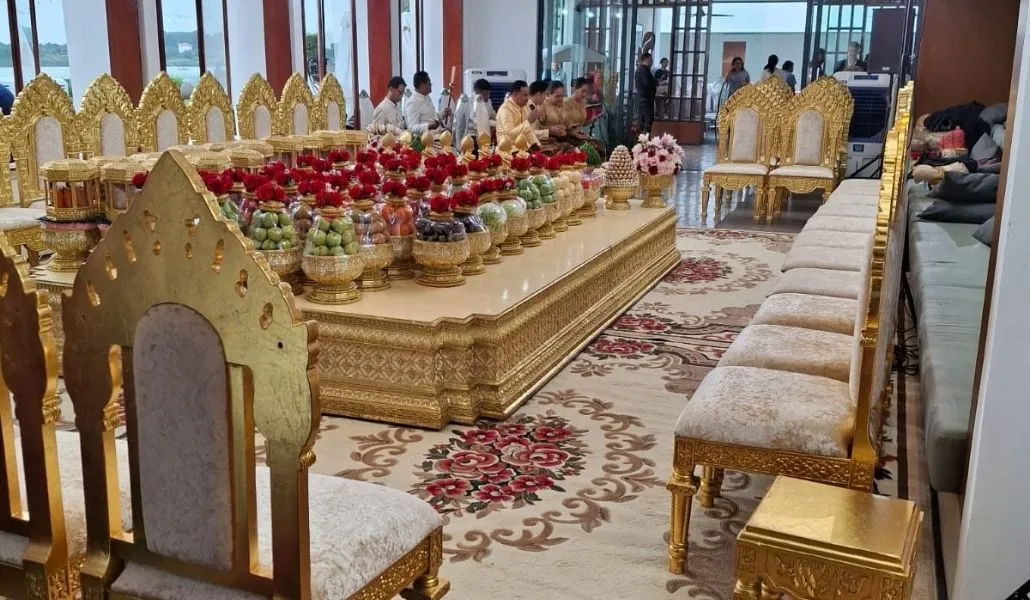
On the second day, more processions take place as the bride and groom honor their families and ancestors. The actual vow making traditionally takes place on the final day, where the symbolic knot between the bride and groom is finally tied. The red string wrapped around the couple’s wrists symbolizes happiness, good health, success, and long lasting love.
Today, many couples in Cambodia choose shorter ceremonies while still preserving the spiritual meaning behind the rituals. Even modern Khmer wedding ceremonies continue to reflect strong family values and respect for tradition.
Popular Khmer Wedding Traditions
Khmer wedding traditions are deeply rooted in Cambodian culture and spirituality. Every ritual performed during a Cambodian wedding ceremony carries symbolic meaning and reflects wishes for prosperity, happiness, fertility, and lifelong harmony for the couple.
While each family may celebrate differently depending on regional customs and personal preferences, several important rituals remain central to traditional Khmer wedding ceremonies.
Monk Blessing Ceremony
One of the most meaningful parts of a Cambodian wedding ceremony is the monk blessing ceremony. Buddhist monks are invited to bless the couple and their families with prayers and sacred chants. This ritual is believed to bring spiritual protection, peace, and prosperity to the newlyweds.
The blessing ceremony often takes place early in the wedding celebration. Family members gather respectfully while monks recite prayers and sprinkle holy water to symbolize purification and good fortune. This spiritual aspect highlights the important role of Buddhism and traditional Buddhist traditions in Cambodia within daily life and marriage ceremonies.
Hair Cutting Ritual
The symbolic hair cutting ritual is another well known Cambodian wedding tradition. During this ceremony, relatives or respected elders pretend to cut the bride and groom’s hair while offering blessings and words of wisdom.
Although the cutting is symbolic, the ritual represents cleansing the couple from their past and preparing them for a fresh beginning together. Music and traditional performances often accompany the ceremony, creating a joyful and lively atmosphere.
The ritual reflects the belief that marriage is not only a union of two individuals, but also the start of a new chapter filled with shared responsibilities and hopes for the future.
Knot Tying Ceremony
The knot tying ceremony is one of the most recognizable traditions in a Khmer wedding ceremony. Family members and guests tie red strings around the wrists of the bride and groom while offering blessings and good wishes.
The red string symbolizes unity, protection, happiness, and enduring love. The ritual also represents the support of family and community as the couple begins married life together.
This ceremony is especially emotional because it involves the participation of loved ones who play an important role in the couple’s future. It reinforces the importance of family bonds in Cambodian society.
Traditional Cambodian Wedding Attire
Traditional Cambodian wedding attire is known for its elegance, rich colors, and intricate details. Brides often wear beautifully embroidered silk dresses inspired by royal Khmer fashion, while grooms wear coordinated traditional outfits.
Gold jewelry is commonly worn during the ceremony because it symbolizes prosperity and good fortune. Cambodian brides may also change outfits several times throughout the wedding celebration, with each costume representing different stages of the ceremony.
The colorful attire, combined with floral decorations and traditional music, creates a visually stunning cultural experience that reflects the beauty of Cambodian heritage.